Why heritage coffee brands are thriving amid industry consolidation
As consolidation within the coffee industry accelerates, heritage brands are proving their value.
The global coffee industry is often portrayed as an upward spiral to the next great innovation. Progression in areas such as cold brew, ready-to-drink (RTD) beverages, and direct-to-consumer subscriptions continue to make headlines.
Yet, alongside the industry’s constant pursuit of the new, there is a parallel in the revitalisation of heritage coffee brands.
From century-old grocery staples to regional roasting institutions, legacy coffee names such as Maxwell House, Julius Meinl, Douwe Egberts, and many more continue to attract investment from multinational groups, private equity firms, and strategic buyers.
Massimo Zanetti Beverage Group, through Massimo Zanetti Beverage USA (MZB-USA), is the custodian of a multitude of these brands around the world.
Matthew Smith, who was appointed President of MZB-USA in 2026 following a career that spans executive roles at businesses such as VOSS Water, Frito-Lay, and Nestlé Waters, says the company’s heritage portfolio is one of its greatest competitive advantages.
“Heritage brands are the bedrock of MZB-USA,” Smith tells Global Coffee Report.
“They give our overall portfolio unmatched category stability, deep regional density, and multi-generational trust across retail and foodservice.
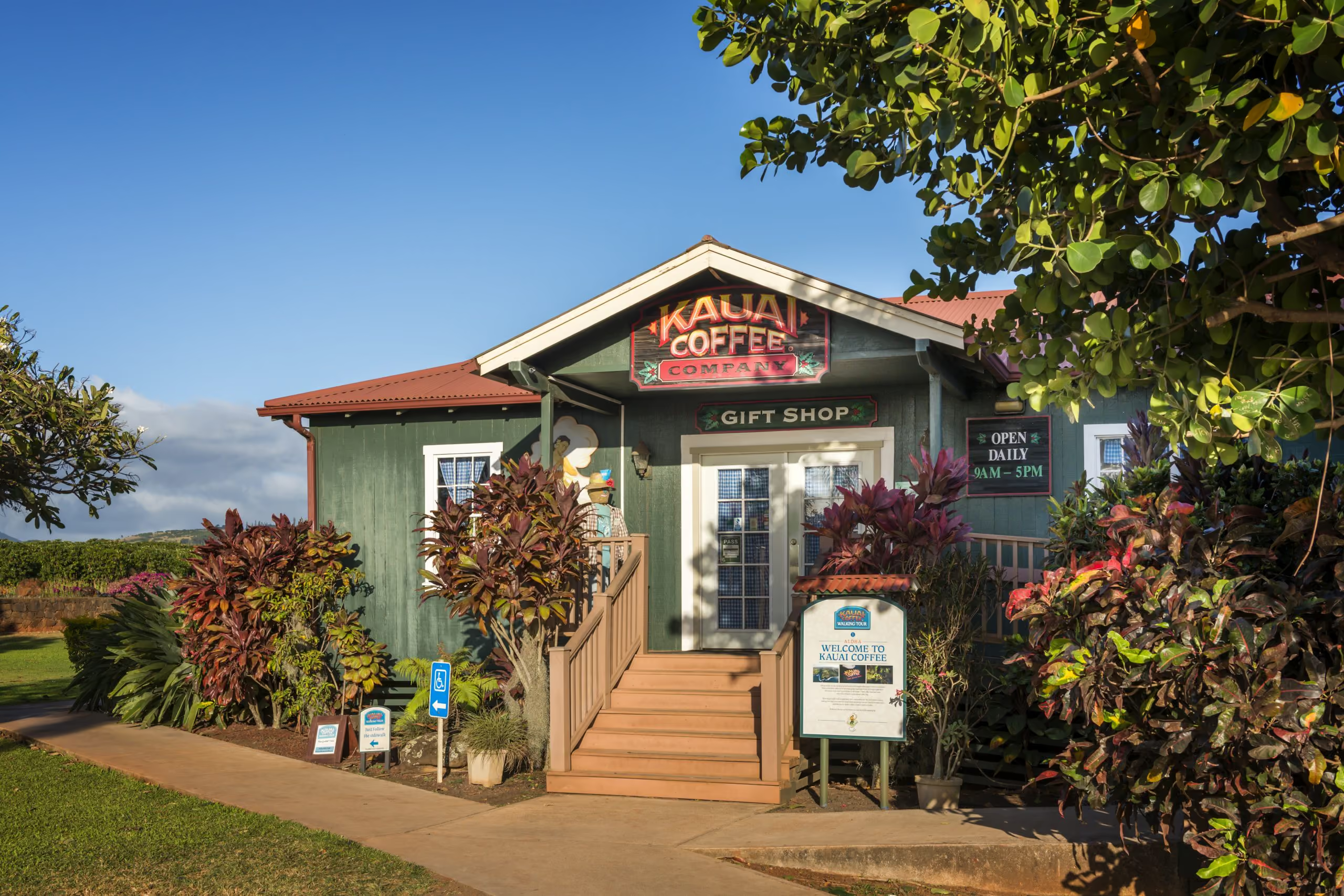
“Each brand – whether it’s Hills Bros. with its San Francisco origins or Kauai Coffee with its historic legacy as America’s largest coffee farm – holds a distinct geographic and emotional footprint.
“They allow us to serve diverse regional consumer preferences with authentic, localised resonance rather than a generic, one-size-fits-all approach.”
For many coffee companies, the appeal of heritage brands lies in their combination of consumer loyalty, brand recognition, and existing distribution networks.
“They come with built-in equity, established distribution channels, and an emotional bond with consumers that would take decades and tens of millions of dollars to build from scratch,” Smith continues.
“When you pair that deep historical root system with MZB-USA’s global sourcing, state-of-the-art roasting infrastructure, and commercial execution, you unlock incredible opportunities to reignite growth and modernise classic assets for today’s shopper.”
Commercial coffee pioneers
Long before the emergence of specialty coffee and global café chains, the coffee industry was built on household brands that enabled coffee to transition from a luxury item to a staple in kitchens everywhere.
Progression in transportation and mass market retail – alongside better roasting technology – saw brands including Hills Bros., Maxwell House, and Folgers standardise coffee consumption across North America.
In Europe, players such as Ireland’s Bewley’s, Austria’s Julius Meinl, and Italy’s Caffè Barbera ensured that, rather than being a regional trend, accessible coffee was sweeping across the world.
These successes were closely linked to the rise of industrialisation and urbanisation. As populations moved into cities and grocery retail modernised, branded coffee became a symbol of reliability.
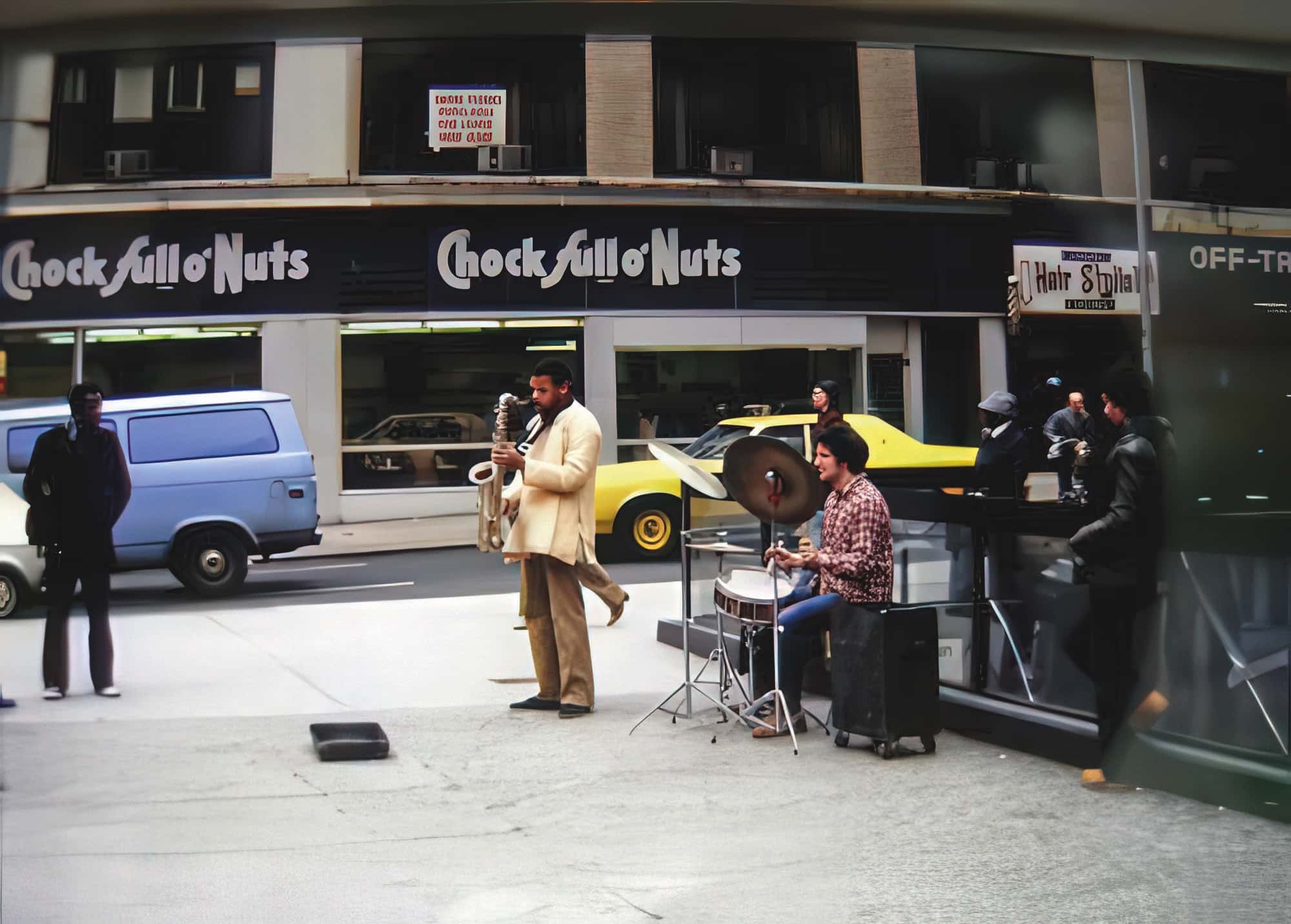
MZB-USA acquired Chock full o’Nuts in 2006. The brand was founded as a nut store at Broadway and 43rd Street in Manhattan in 1926, hence the interesting name.
By 1932, Founder William Black transitioned his 18 nut shops into lunch counters as the Great Depression dampened luxury food sales. It wasn’t long before it became famous for serving a coffee and sandwich for five cents.
Then, in 1953, it started selling packaged coffee in grocery stores. It’s a brand with an immense amount of history that maintains relevance in the modern market. Nearly a century after first moving to coffee, it remains one of the clearest examples of how history can become a competitive advantage.
Interestingly, some of the renewed interest in heritage brands is being driven by younger consumers according to Smith.
Across food and beverage categories, longstanding brands are increasingly being rediscovered by shoppers seeking trust and provenance in a market crowded with new launches and products.
While these consumers may not have grown up with some of these brands, they are often attracted to the history and cultural relevance attached to them.
“Decades ago, Chock was the daily fix of the classic New York morning routine. Today, while it remains a deeply trusted staple for multi-generational families, its footprint and resonance have expanded across the country,” says Smith.
“To modern shoppers, it represents an unfiltered authenticity and grit in a category that has become overly complex and inflated.
“As we look ahead, our strategy is twofold: protect and honour the loyal consumer base that built this brand, while intentionally opening the door for the next generation of coffee drinkers.”
For Smith, that relevance is rooted in something many newer brands spend years building and chasing: genuine consumer trust.
“When MZB-USA acquired Chock full o’Nuts, we knew we were taking stewardship of an authentic piece of American cultural history – a brand that survived the Great Depression, built an unshakeable bond with everyday New Yorkers from doormen to directors, and earned an iconic place in coffee culture,” he says.
“That kind of multi-generational trust is impossible to fabricate. For years, our priority was steady stewardship and maintaining its core distribution footprint. But, as we look at the marketplace today, we are stepping into a dynamic new chapter of brand activation.”
Consolidation nation
Over the past two decades, consolidation has touched almost every corner of the coffee value chain. Multinational food and beverage companies have acquired roasters, cafés, RTD manufacturers, and direct-to-consumer brands in a push to secure market share and diversify portfolios.
Historically, acquisitions were often driven by scale. Larger businesses looked to increase purchasing power and strengthen their presence on supermarket shelves. While those factors are still important, the rationale behind acquisitions has evolved.
Rising green coffee prices, increasing operational costs, and heightened competition for retail shelf space have made scale more valuable than ever.
Today’s buyers look to be increasingly targeting brands with established consumer trust and authentic stories that resonate.
Large multinational groups continue to seek out these established brands that already possess consumer recognition and distribution strength, rather than building those assets from scratch.
In 2026 alone, the merger between Keurig Dr Pepper and JDE Peet’s has been completed, Blue Bottle Coffee has been sold to Luckin Coffee’s main investor, Centurium Capital, and Starbucks has sold a 60 per cent stake of its Chinese operations to Boyu Capital.
Massimo Zanetti Beverage Group, as one of the world’s largest coffee companies, is certainly part of that consolidation trend. However, Smith says preserving regional identity remains a central pillar of the company’s acquisition strategy.
“We’re in a unique position: our portfolio isn’t a collection of overlapping national brands competing for the same shelf space – it’s a set of brands with deep, authentic regional footholds,” he says.
“That’s precisely why a one-size-fits-all playbook doesn’t work for us. Chock full o’Nuts carries a century of New York City heritage. Kauai Coffee is genuinely grown and rooted on the island of Kauai. Hills Bros. has its own deep legacy grounded in the Midwest.
“Each brand earned its place with a specific community, and our job is to protect and build on that authenticity rather than flatten it into a single corporate template.”
While there are common operational threads that link the likes of Chock full o’Nuts, Hills Bros., and Kauai Coffee, MZB-USA’s approach in pushing its portfolio is deliberately tailored brand by brand.
“How we show up in retail, the channels we prioritise, the stories we tell, and even the innovation pipeline all flex based on what that brand’s consumer wants and where they encounter it,” says Smith.
“That is the ultimate advantage of managing a portfolio like ours: we leverage the scale and infrastructure of a national platform while preserving the genuine credibility of true regional favourites.”
As specialty coffee and modern, on-trend drinks and venues continue to enter the market, Smith says there is still plenty of room for heritage brands to not only survive but thrive.
“Specialty coffee has elevated the overall coffee category, but it has also created a space where many consumers simply want a reliable, great-tasting, straightforward cup of coffee to fuel their daily hustle,” he says.
“Brands like Chock full o’Nuts resonate because we offer an unpretentious, dependable anchor. We don’t ask consumers to decipher complex flavour notes – we give them a rich, satisfying brew rooted in nearly a century of authenticity.
“As the market evolves, we recognise that staying relevant requires continuous, purposeful re-engagement. That’s why we are actively reinvigorating Chock full o’Nuts – starting by leaning back heavily into our heartland in the Northeast – to ensure this iconic brand continues to earn its place on the counter for both longtime loyalists and the next generation of coffee drinkers.”
Taking it forward
For all the value attached to heritage brands, their long-term viability comes down to preserving decades of consumer trust while adapting to the expectations of the modern coffee drinker.
Smith says that while nostalgia is a powerful tool, it alone does not generate repeat business or scalability.
“Consumer trust carries more weight today than ever before because the modern aisle is so crowded with options,” he says. “But nostalgia alone only gets a consumer to buy the first can – quality and consistency are what get them to buy the second, third, and hundredth.
“Nostalgia opens the door, but our success is driven by the fact that the coffee inside delivers a rich, consistently bold cup every morning.
“Consumers trust us because throughout our history, we haven’t compromised on our quality, taste profile, or commitment to excellence.”
How, then, does one modernise a business that means so much to its loyal consumers without putting them offside?
“The ‘untouchable’ core of Chock full o’Nuts is our commitment to flavour consistency and our iconic steel package, which remains the gold standard for freshness and circular sustainability,” says Smith.
“When looking to modernise, the main consideration is ensuring the visual design reflects the brand’s modern vitality without severing its historic roots.”
It’s an approach that will be on show in 2027, with a “major brand evolution” marking 95 years of coffee from the heritage brand on the cards
“As we look ahead to 2027, we’re refreshing our visual identity for the first time in more than 15 years and putting in the work to ensure this historic anchor in our portfolio thrives for its second century,” he says.
“Our focus is giving the packaging a sharp, elevated presence on the shelf while reassuring our core consumer that the rich, dependable coffee they love has a new look but the same classic soul,” says Smith.
Nearly two decades into MZB-USA’s stewardship of one of the oldest coffee brands in the US, Smith says it continues to shape the company’s thinking on heritage assets.
“Chock full o’Nuts has taught us that consumer trust is the single most valuable asset a brand can possess, but it’s never something you can take for granted. Multi-generational loyalty isn’t self-sustaining – it requires continuous effort, respect, and active listening.
“Managing a brand with nearly a century of history is a humbling responsibility. It has reminded us that while marketing tactics and retail channels evolve, product integrity and visual relevance must keep pace.
“That earned trust is what carried it from a 1920s nut stand to an iconic American household staple, and it’s the foundation we’re building on for its next century.”
Source
URL